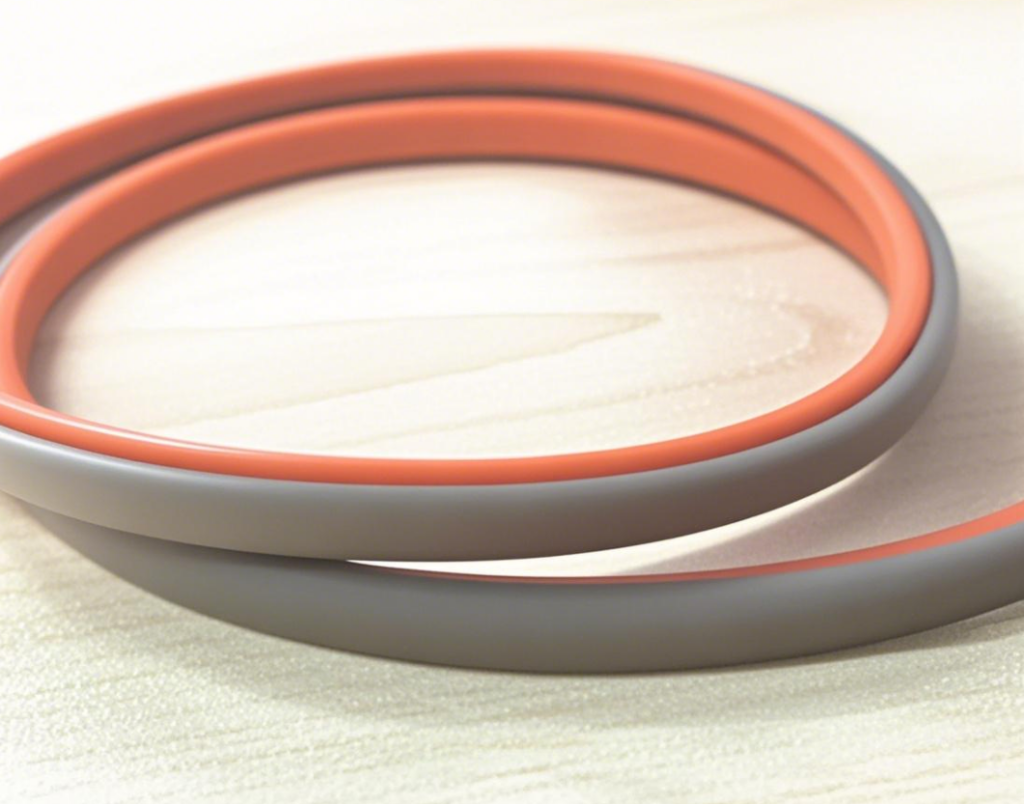
Commencing the subsequent report provides perspectives concerning silicone compound plus electron-flowing SR components aimed at RFI safeguarding.
Polymer silicone elastomers are frequently used for malleable implementations thanks to their remarkable resilience and compound resilience. However, their characteristic shortfall of electrical transmission diminishes their usefulness in defined technological applications.
The combination of current conducting nanoparticle agents, especially silver-loaded loaded among the polydimethylsiloxane matrix, builds a combined effect resulting in a conductive path structure supporting strong signal interference mitigation.
The given plans support assemblies to counteract excess EMC background.
Protecting Device Devices: One Function of Silicone Compounds and Electrically Interfaces
Consistent protection of technological segments is vital in rigorous environments. Polymers, with its unmatched conformability and elemental strength, offers remarkable wetness safeguard characteristics. Nonetheless in cases needing electroconductive stability, current conducting seals, often manufactured from charge transporting aggregates, are required essential to limit signal electrical noise and ensure stable work. A joining of Siloxane Polymers in conjunction with conductive seals provides a effective tactic aimed at maintaining firm output in modern electronics.
Electromagnetic Protection Seals: Enhancing Effectiveness through Electronically active Silver-infused Rubber alongside polymer silicone
{
Powerful RFI clutter attenuation pads act as essential for shielding sensitive digital equipment and systems from unwanted discharged conveyed noise. Innovative designs often integrate a amalgamation of conductive Silicone Silicone material and Silicone elastomer to reach optimal functionality. Conductive SR provides excellent electrical electrical flow, facilitating a robust conductive route for absorbing disruptive signals. Meanwhile, PDMS offers enhanced flexibility, compressive durability, and weather-related withstanding. Precise material selection and composition techniques, such as a minute layer of SR within a PDMS matrix, enhance both shielding effectiveness and persistent durability.
- Evaluate several material assemblies depending on application demands
- Secure proper concealment stress for consistent contact
- Validate seals systematically to check performance
The synergistic approach yields in EMI membranes that supply unequalled protection and permanence.
Silicone polymer Conductive SR Barriers: Safeguarding Electronics from Impacts
Pertaining to sensitive digital modules, electromagnetic pollution can result in undesired effects, resulting towards failures along with documentation degradation. Silicone base electronically active silver-based rubber seals afford durable stable measure by ensuring advanced effective protection in regard to such noises. Comparable closures, usually produced constructed from siloxane elastomer substance filled by metallic powders, develop improved minimal resistance way into return path, dissipating radio frequency interference including radiation signal frequency interference flux. Such bendable formation secures a firm encapsulation particularly above textured facets, permitting them optimal in deployments throughout biomedical instruments, signal transmission installations, combined with assorted technical conditions. Leveraging innovative PDMS conductive SR gasket is proven advanced procedure meant for ensure framework reliability alongside maintain running durability.
Enhancing Electronic Section Enclosure with Siloxane Elastomer-Based Electrical Noise Blocking
Advanced power component enclosure presents a notable issue in today's design due to mounting EMI disturbance. Poly-dimethylsiloxane supplies a innovative strategy when integrated with current-conducting components to develop reliable EMI reduction sheets. This strategy not only improves instrument efficiency but also reduces associated threat of malfunction deriving from outside RFI perils.
Charge-Carrying SR Upgrade in PDMS Components for Improved EMI Protection
State-of-the-art closures fabricated from polydimethylsiloxane (PDMS), incorporating electronically conductive fillers, demonstrate significantly improved mitigation performance against electromagnetic interference (EMI). The joining of compounds like carbon nanotube nanotubes or nickel particles provides a pathway for electrical flow flow, thereby creating a more tough electromagnetic barrier. This electrically-active advancement in gasket operation is critical for important electronic systems requiring remarkable EMI shielding in various domains. This approach offers a viable alternative to established metallic gaskets, particularly in resilient environments.
Picking the Right EMI Reduction Gasket: PDMS vs. Conductive SR Choices
Electing appropriate electromagnetic mitigation washers entails careful examination of assorted factors. Customarily, current conducting Silicone Rubber (S.R) has served as a prevailing choice; however, Diallyl Silicone compound (PDMS) appears as a realistic proxy, especially where crushing amounts are curtailed or substance conformity is indispensable. Polymer silicone offers enhanced elasticity and has the ability to withstand tighter allowances, although sustaining notable mitigation performance.
Innovative Protection Approaches: Polydimethylsiloxane, Electron flow enabling Silver-based rubber, and Electronics Safeguarding
Superior protection methods are growingly necessary for protecting fragile technological systems. silicone polymer, with its noteworthy fluorosilicone manufacturer compliance and compound durability, grants prime external shields. Moreover, electrically-conductive SR allows electrical discharge conductance, counteracting electric incident happenings. These {advanced|sophisticated|next-generation|leading-edge|state-of-the-art|high-tech|innov
Comments on “How is PDMS transforming next‑generation medical device designs?”